Deal of the day
Children
Choose children's wool clothing around height and the layers the child will actually wear. Explore sweaters, trousers, one-piece outfits and sets, ponchos and accessories. For outdoor combinations, try the hat, scarf and mittens with the jacket. Socks also need enough space inside footwear. Treat an age label as the manufacturer's guide, not a s...
Choose children's wool clothing around height and the layers the child will actually wear. Explore sweaters, trousers, one-piece outfits and sets, ponchos and accessories. For outdoor combinations, try the hat, scarf and mittens with the jacket. Socks also need enough space inside footwear. Treat an age label as the manufacturer's guide, not a substitute for sleeve, waist or head measurements. Assess comfort through the particular fabric and the child's response rather than assuming universal softness.
Comparing items across sections
Choose the main piece first, then add the other garments. Try the combination with footwear and outerwear already in use: matching colours do not establish comfortable combined fit. Composition belongs to the individual product. Lining, fastenings, length and available sizes can differ even between similar-looking items. For gifts, actual measurements and preferences are more useful than an assumed letter size. When selecting several pieces, note the necessary measurements for each one separately. This avoids transferring the fit of one garment to another and helps identify layers whose combined bulk does not suit the intended use.
Caring for the item
Keep the care instructions from the product page and label. Washing and drying depend on the individual model rather than wool percentage alone. Check that you can follow them before ordering. Allow suitable space if flat drying is required. Do not use washing to correct an unsuitable size.
Useful sections
Clothing sizes and measurements · Caring for wool clothing · Order delivery and returns
Choose children's clothes using height and measurements, allowing for the layer underneath and movement. Excess growth allowance can obstruct walking, dressing and using fastenings.
-
Sweaters and jackets
Choose boys' and girls' wool sweaters by height, measurements and everyday movement. A pattern does not determine fit, and matching size labels can still mean different sleeve and body lengths. Start with children's sweater sizing, then assess the neckline and independent dressing. Zips and buttons require different fastening actions that are worth trying calmly. Compare the top with children's trousers so unnecessary bulk at the waist does not obstruct sitting or movement. Include the usual base layer during the fitting.
Composition and construction
Read the full composition when comparing sweaters rather than relying on the word wool. Different blends and stitch structures need their own texture and care assessment. If merino is specified, the material guide provides background, but another model's properties should not be transferred to it. For a fastening, inspect the open neckline, internal band and slider position. With a pullover, check dressing over the head; with a cardigan, compare the front open and closed. Choose a close or relaxed silhouette using the actual base layer, particularly around the shoulders and underarms, rather than testing the sweater in isolation.
Caring for the item
Keep the care instructions from the product page and label. Washing and drying depend on the individual model rather than wool percentage alone. Check that you can follow them before ordering. Allow suitable space if flat drying is required. Do not use washing to correct an unsuitable size.
Useful sections
Clothing sizes and measurements · Caring for wool clothing · Order delivery and returns
Checking the fit
During fitting, raise your arms, reach forward and sit down. Check that the hem stays at a comfortable height and the shoulders do not pull. A raglan sleeve may be measured from a different starting point than a set-in sleeve; compare the method with the chart. Test the collar open and closed. For wear under a jacket, try the complete outfit together. Inspect the reverse of patterned fabric, especially colourwork. Choose a gift sweater using the recipient's actual measurements rather than an assumed usual size. Clarify missing product information before payment.
-
Pants
Compare children's wool trousers and underlayers by waist, length and intended role. Loose trousers and a garment intended beneath another layer are not interchangeable simply because they share a fibre. Check the waist while seated, knee room and cuff position. The children's wool trouser guide develops these points. Explore sweaters for the top and socks around the lower edge. Material name alone cannot establish a universal wearing temperature; consider the complete outfit and use conditions.
Compare measurements in your usual outfit
Lay a suitable garment flat and compare it with the model's dimensions using identical start and finish points. Garment width and body circumference are different measurements. Assess fit with the intended base layer: sit, raise your arms and check edge positions. Layering requires room without unnecessary bulk at bending points. Read the complete composition because a category name groups items rather than establishing one material for every model. Request missing dimensions and the measuring method before ordering. Do not transfer another product's measurements simply because it has a similar photograph or size label.
Caring for the item
Keep the care instructions from the product page and label. Washing and drying depend on the individual model rather than wool percentage alone. Check that you can follow them before ordering. Allow suitable space if flat drying is required. Do not use washing to correct an unsuitable size.
Useful sections
Clothing sizes and measurements · Caring for wool clothing · Order delivery and returns
-
Coveralls and sets
A child's wool one-piece outfit and a clothing set require different sizing checks. A one-piece design combines body, sleeve and leg length; separate pieces must each fit. When sitting or bending, insufficient body length should not pull noticeably at the shoulders. The one-piece outfit guide explains fitting, while the size guide covers measurements. Check exactly what the set includes: photographed accessories may be separate. For younger children, also inspect access to fastenings and seam placement. Measure every part of a set separately, even with one shared size label.
Compare measurements in your usual outfit
Lay a suitable garment flat and compare it with the model's dimensions using identical start and finish points. Garment width and body circumference are different measurements. Assess fit with the intended base layer: sit, raise your arms and check edge positions. Layering requires room without unnecessary bulk at bending points. Read the complete composition because a category name groups items rather than establishing one material for every model. Request missing dimensions and the measuring method before ordering. Do not transfer another product's measurements simply because it has a similar photograph or size label.
Caring for the item
Keep the care instructions from the product page and label. Washing and drying depend on the individual model rather than wool percentage alone. Check that you can follow them before ordering. Allow suitable space if flat drying is required. Do not use washing to correct an unsuitable size.
Useful sections
Clothing sizes and measurements · Caring for wool clothing · Order delivery and returns
-
Ponchos
Compare a child's wool poncho by its unfolded length and width. A loose silhouette does not remove the need for sizing: the edge should not obstruct the arms and the neckline should allow comfortable dressing. If you need a layer beneath a jacket, compare its construction with a regular sweater. The poncho guide helps assess front and back placement. With a small selection, actual measurements are more useful than choosing only by age or pattern.
Compare measurements in your usual outfit
Lay a suitable garment flat and compare it with the model's dimensions using identical start and finish points. Garment width and body circumference are different measurements. Assess fit with the intended base layer: sit, raise your arms and check edge positions. Layering requires room without unnecessary bulk at bending points. Read the complete composition because a category name groups items rather than establishing one material for every model. Request missing dimensions and the measuring method before ordering. Do not transfer another product's measurements simply because it has a similar photograph or size label.
Caring for the item
Keep the care instructions from the product page and label. Washing and drying depend on the individual model rather than wool percentage alone. Check that you can follow them before ordering. Allow suitable space if flat drying is required. Do not use washing to correct an unsuitable size.
Useful sections
Clothing sizes and measurements · Caring for wool clothing · Order delivery and returns
-
Socks, knee socks, leg...
Choose children's wool socks by foot length rather than age alone. Taller socks and separate leg warmers also need an assessment of how they sit around the leg. Check for fabric gathering at the toes and confirm that footwear still has enough room. Excess growing room can be awkward too. With children's trousers, inspect where the cuffs meet. The guide to socks and leg warmers explains the construction differences before you choose the appropriate combination.
Foot length and footwear space
For an item covering the foot, compare heel-to-longest-toe length with the model's chart. Do not stretch the garment to its limit to make the numbers match. Check heel placement and folds under the foot, then put on the intended footwear. The pair should fit inside without noticeable compression. With a taller leg section, inspect the upper edge after walking and bending the leg. If it repeatedly slips or presses uncomfortably, compare another width or construction. For leg warmers, clarify foot coverage and the lower edge separately because these affect how the item combines with socks and shoes.
Caring for the item
Keep the care instructions from the product page and label. Washing and drying depend on the individual model rather than wool percentage alone. Check that you can follow them before ordering. Allow suitable space if flat drying is required. Do not use washing to correct an unsuitable size.
Useful sections
Clothing sizes and measurements · Caring for wool clothing · Order delivery and returns
-
Hats
Choose children's wool hats by head circumference and depth. Age does not replace measurement: the lower edge should sit comfortably around the forehead and ears when the child turns their head. If a design combines hat and scarf, separately assess the neck section against the jacket collar. The children's hat guide explains those checks. For separate accessories, compare children's scarves and mittens. Verify lining, ties and composition on the specific product page.
Size and the inside surface
Measure around the head where the lower edge will sit. Compare this with the specific size rather than relying only on stretch. Turn and lower your head during fitting and check whether the edge moves over the eyes. Assess depth together with ear position. The internal surface may differ from the outside, so confirm lining composition and seams where applicable. Do not select a tight hat expecting it to stretch into the right fit. If the label and photographs leave the shape unclear, ask for flat height and width with the measuring method instead of guessing from one model photograph.
Caring for the item
Keep the care instructions from the product page and label. Washing and drying depend on the individual model rather than wool percentage alone. Check that you can follow them before ordering. Allow suitable space if flat drying is required. Do not use washing to correct an unsuitable size.
Useful sections
Clothing sizes and measurements · Caring for wool clothing · Order delivery and returns
Hat fit depends on head circumference and depth. Check ear flaps, edge and lining. The design should leave the eyes clear and allow the head to turn under a hood.
-
Scarves
A child's wool scarf should work with the jacket collar and hat. Start with length and width, then assess folded bulk. An adult accessory does not necessarily become comfortable for a child through an additional wrap. Try it with a children's hat and check the combination as the head turns. The scarf guide explains why usable fabric dimensions matter more than the overall photograph. Assess texture specifically where it will touch the neck.
Unfolded shape and folded bulk
Check the main fabric length and width separately from decorative ends. Fold the accessory as you usually wear it and inspect edge placement. Unfolded width helps assess shoulder coverage but does not show knot bulk. Try the combination with fastened outerwear and turn your head. If the item needs constant adjustment, compare another size or shape. Assess the edge and label as carefully as the centre where they contact the neck. Patterns can look different after folding, so compare colour beside your clothes while allowing for differences in how a screen displays shades.
Caring for the item
Keep the care instructions from the product page and label. Washing and drying depend on the individual model rather than wool percentage alone. Check that you can follow them before ordering. Allow suitable space if flat drying is required. Do not use washing to correct an unsuitable size.
Useful sections
Clothing sizes and measurements · Caring for wool clothing · Order delivery and returns
-
Gloves and mittens
Choose children's wool mittens and gloves around hand measurements and ease of dressing. Check whether the thumb compartment is easy to find and the cuff stays in place during movement. Age does not replace measuring the hand. The children's mitten guide helps organise a fitting. Compare with the hat and jacket sleeve, avoiding unnecessary wrist bulk. If there is a lining, confirm its composition and thickness separately. Wool fabric alone does not establish waterproof performance.
Hand and cuff checks
Follow the seller's measuring method: hand length and palm circumference are different measurements and cannot be compared as the same number. Open your hand, bend the fingers and gently make a fist during fitting. Check that the thumb stays in place without pulling at its base. The cuff should work with the sleeve without a bulky bunch of fabric. If precise finger movement matters, test it before buying; appearance cannot establish grip comfort. An additional inner layer requires fitting the whole combination. Do not assume one pair will suit every underglove or sleeve equally well.
Caring for the item
Keep the care instructions from the product page and label. Washing and drying depend on the individual model rather than wool percentage alone. Check that you can follow them before ordering. Allow suitable space if flat drying is required. Do not use washing to correct an unsuitable size.
Useful sections
Clothing sizes and measurements · Caring for wool clothing · Order delivery and returns
-
-
 1
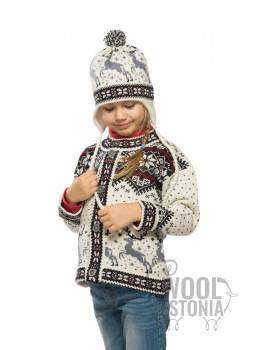
1Kids winter hat with a deer, with ears
Fleese lined kids winter hat with a deer, with ears
57,18 €In Stock -
-
 1
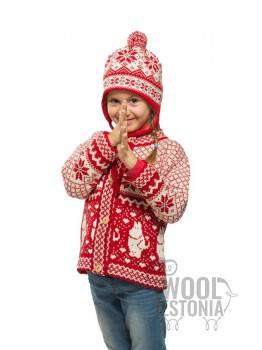
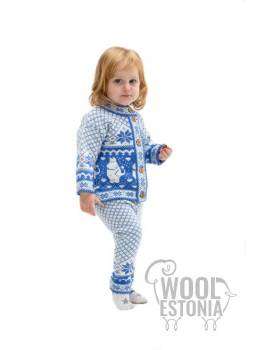
1Kid's set with a Mummi, with buttons
Kid's set with a Mummi, with buttons 100% lambswool
106,38 €In Stock -
 0
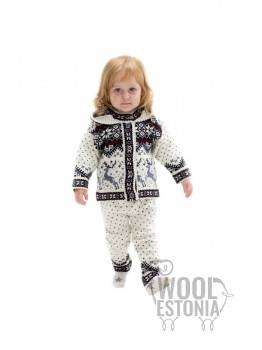
0Kid's set with a deer, buttons and with a...
Kid's set with a deer, buttons and with a hood 100% lambswool
114,36 €In Stock -
 1
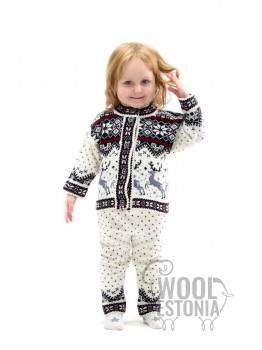
1Kid's set with a deer, with buttons
Kid's set with a deer, with buttons 100% lambswool
98,41 €In Stock -
 1
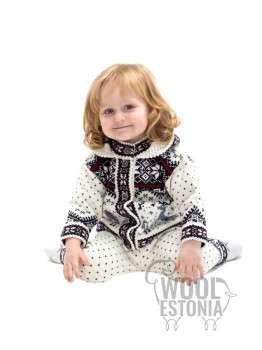
1Kid's jacket with a deer, with buttons,...
Kid's jacket with a deer, with buttons and a hood 100% lambswool
87,77 €In Stock -
 1
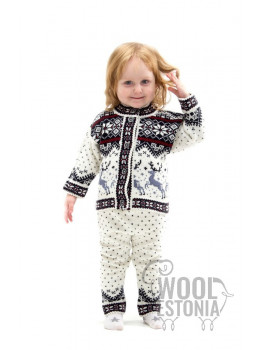
1Kid's jacket with a deer, with buttons
Kid's jacket with a deer, with buttons 100% lambswool
70,70 €In Stock -
 1
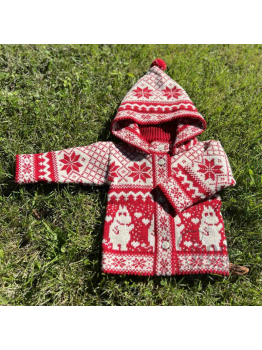
1Kid's jacket with a Mumitroll, with...
Kid's jacket with a Mumitroll, with buttons and a hood 100% lambswool
89,55 €In Stock -
 1
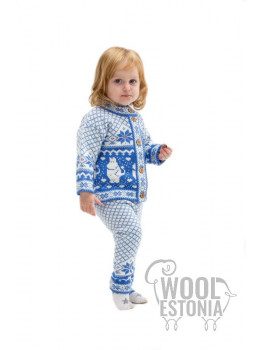
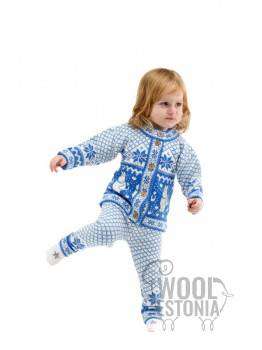
1Kid's jacket with a Mumitroll, with buttons
Kid's jacket with a Mumitroll, with buttons 100% lambswool
68,60 €In Stock -
-
-
 1
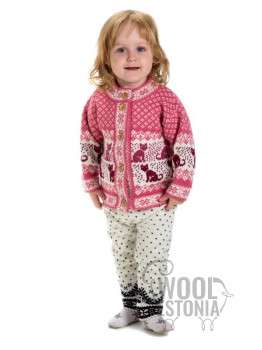
1Kid's jacket with cats, with buttons
Kid's jacket with cats, with buttons 100% lambswool
70,70 €In Stock -
 1
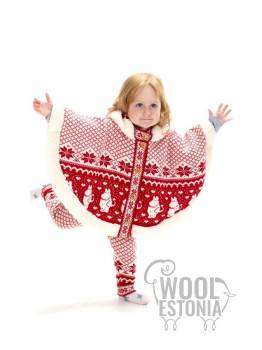
1Kid's poncho with a Mumitroll, with a hood
Kid's poncho with a Mumitroll, with a hood
159,30 €In Stock -
 2
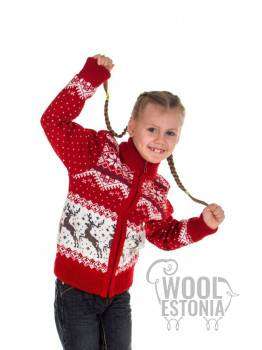
2Kid's full zip sweater with a deer
Kid's full zip sweater with a deer 100% lambswool
86,44 €In Stock -
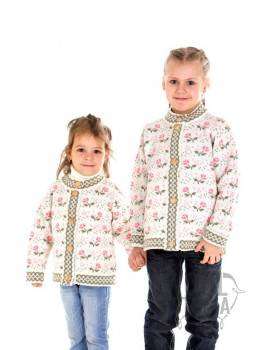 1
1Kid's jacket with roses, with buttons
Kid's jacket with roses, with buttons 100% lambswool
70,70 €In Stock -
-
-
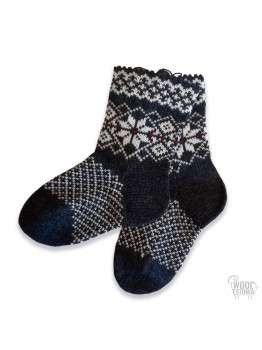 2
2Kid's woolen socks with a "Star" pattern
Kid's woolen socks with a "Srar" pattern 100% lambswool
27,70 €In Stock -
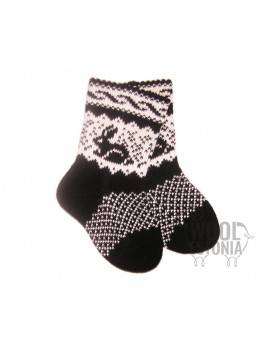 2
2Kid's woolen socks with a "Rabbit" pattern
Kid's woolen socks with a "Rabbit" pattern 100% lambswool
25,49 €In Stock -
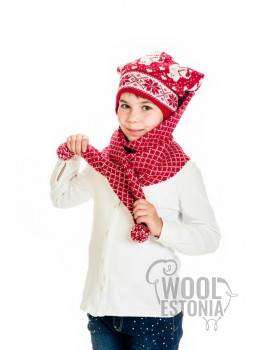 1
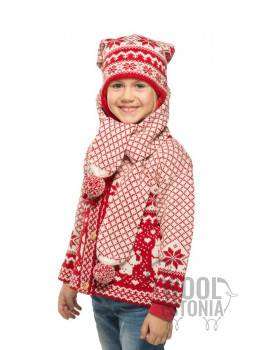
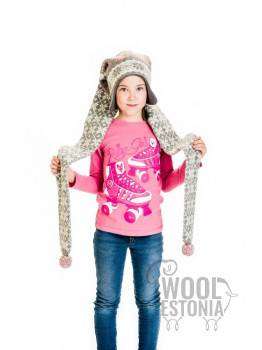
1Hat-scarf with Mumitroll, with ears
Woolen hat-scarf with Mumitroll, fleece lined
74,47 €In Stock -
-
 1
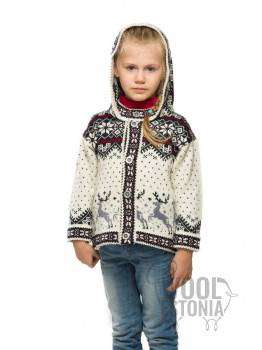
1Teens jacket with a deer, with a hood,...
Teens jacket with a deer, with buttons and a hood 100% lambswool
87,77 €In Stock -
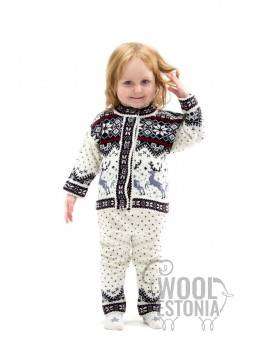 0
0Kid's jacket with a deer, with buttons
Kid's jacket with a deer, with buttons 100% lambswool
70,70 €In Stock -
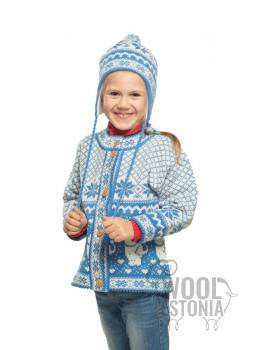 0
0Teens jacket with a Mumitroll, with buttons
Teens jacket with a Mumitroll, with buttons 100% lambswool
68,60 €In Stock -
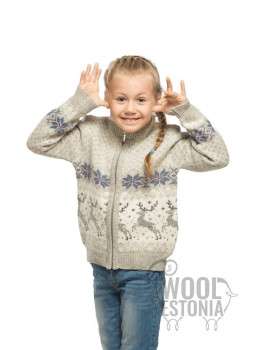 1
1Teen's full-zip sweater with a deer
Teen's full zip sweater with a deer 100% lambswool
86,44 €In Stock -
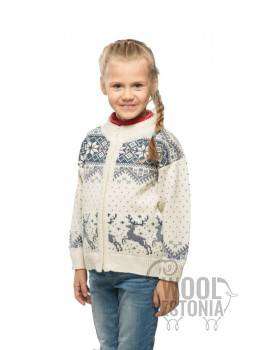 1
1Teen's full-zip sweater with a deer
Teen's full zip sweater with a deer 100% lambswool
86,44 €In Stock -
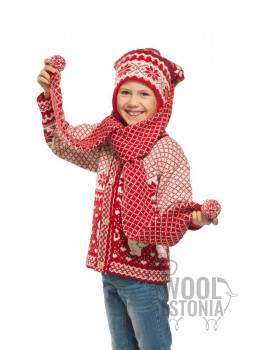 1
1Teens hat-scarf with a star, with ears
Teens hat-scarf with a star, with ears, fleece lined
74,47 €In Stock -
-
-
-
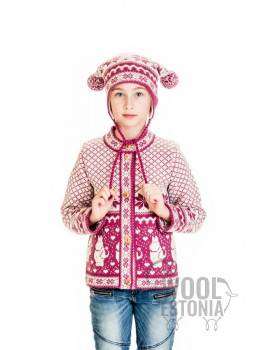
-
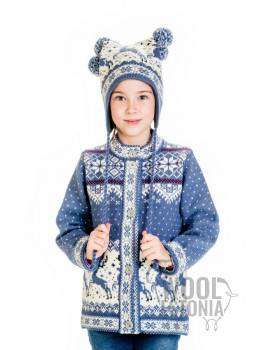 1
1Kids hat with a deer, with four pompons
Fleece lined kids winterhat with a deer, with four pompons
57,18 €In Stock -
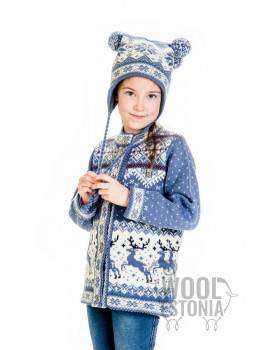 1
1Kids hat with a star, with four pompons
Fleece lined kids winterhat with a star, with four pompons
57,18 €In Stock -
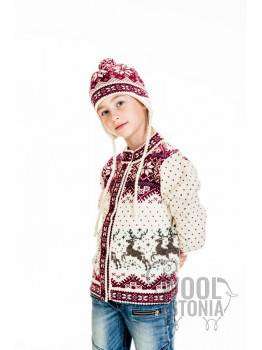 1
1Kids jacket with a deer, with buttons
Kid's jacket with a deer, with buttons 100% lambswool
70,70 €In Stock -
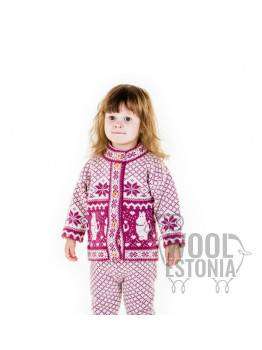 1
1Kid's jacket with a Mumitroll, with buttons
Kid's jacket with a Mumitroll, with buttons 100% lambswool
68,60 €In Stock -
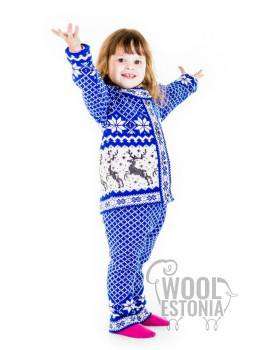 1
1Kid's jacket with a deer, with buttons
Kid's jacket with a deer, with buttons 100% lambswool
68,60 €In Stock -
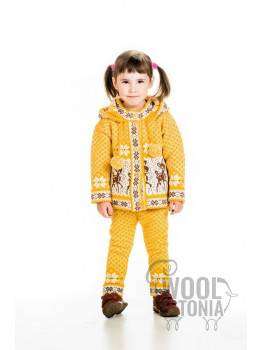
-
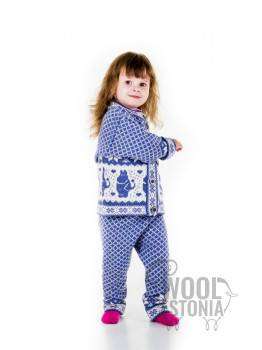
-
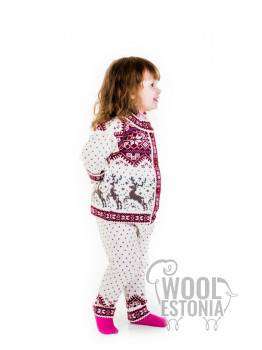
-
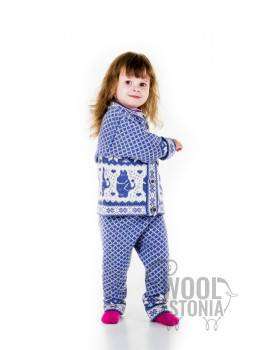 1
1Kid's set with a Mummi, with buttons
Kid's set with a Mummi, with buttons 100% lambswool
106,38 €In Stock -
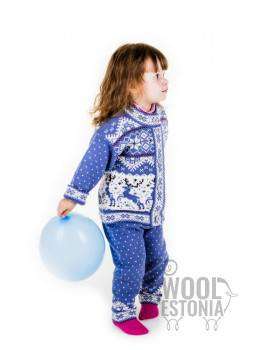 2
2Kid's set with a deer, with buttons
Kid's set with a deer, with buttons 100% lambswool
98,41 €In Stock -
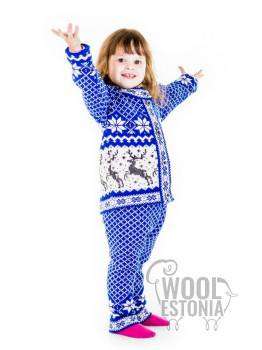
-
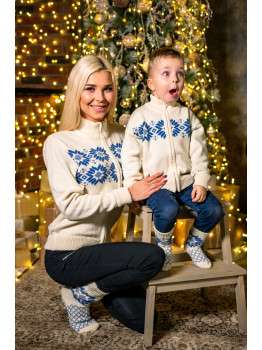 4
4Woolen sweater for children. 100% soft wool
Children's sweater with a cornflower, full zip 100% soft wool Great opportunity to make a family look
95,75 €In Stock -
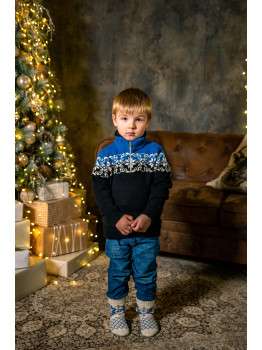 1
1Sweater for children. Different colours....
Sweater for children. Different colours. Sweater with fleece lining on neck. 100% wool
87,77 €In Stock -
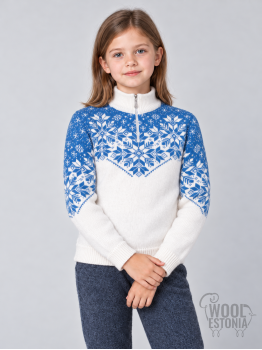 1
1Kid's sweater with half zipper. 100% wool.
Kid's sweater with a half zipper. 100% soft wool Great opportunity to make a family look with these sweaters!
106,38 €In Stock -
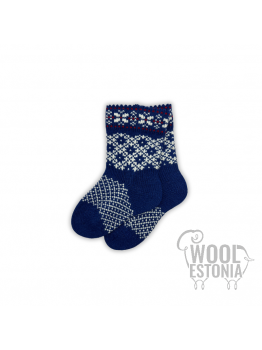 0
0Kid's woolen socks with a "Kihnu" pattern
Kid's woolen socks with a "Kihnu" pattern 100% lambswool
31,03 €In Stock -
 0
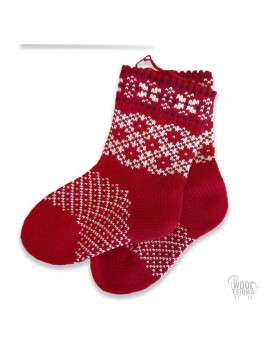
0Kid's woolen socks with a "Kihnu" pattern
Kid's woolen socks with a "Kihnu" pattern 100% lambswool
31,03 €In Stock -
 0
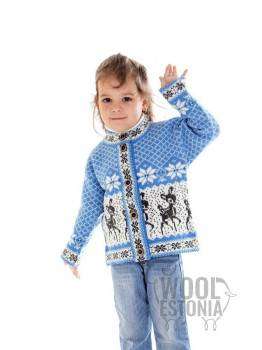
0Kid's jacket with a Bembi, with buttons
Kid's jacket with a Bembi, with buttons 100% lambswool
68,60 €In Stock -
 0
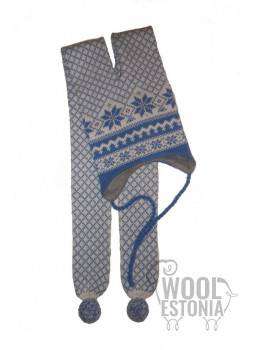
0Hat-scarf with a star, with ears
Kids hat-scarf with a star, with ears, fleece lined
70,48 €In Stock